
🎯Too Long; Didn’t Read
“Oldest” can mean ancient origins or long, continuous settlement—both matter for travelers.
- Athens: core ancient Greek sites + strong museums, but expect crowds.
- Argos: quieter, with major ancient remains and easy links to nearby highlights.
- Plovdiv: Roman theater + ruins blended into a walkable modern city.
- Rome: dense, iconic ancient sites—plan timed tickets and pace yourself.
- Cádiz: early seafaring history, a museum-first city, and lots of coastal downtime.
- Trier: Roman landmarks in a compact, visitor-friendly setup.
- Dubrovnik: wall walk is the main event—go early to dodge peak crowds.
- Tallinn: medieval streets, towers, and walls with an easy old-to-new city split.
- York: layered history, walkable walls, and strong Viking + cathedral stops.
Best travel strategy: Travel planning improves by targeting shoulder seasons. Begin trips several days early. Visit museums during peak heat or crowds—the worst times for outdoor activities anyway. Significant savings come from avoiding city centers for accommodation. Likewise, main squares will bleed your wallet dry; eat elsewhere. And listen, just skip those random tours. Structure itineraries in geographic clusters, following regional routes. Keep travel transfers brief. Minimum stay per location: two nights. This reduces wasted time packing and moving.
What Makes a European Town “Oldest”?
Ancient Origins vs. Continuous Settlement
A town can be “old” in more than one sense. Some places have ancient origins: early settlement is proven, but the town later moved, shrank, or was rebuilt after long breaks. Others have a stronger claim to continuous settlement, where a community kept living in the same urban area with no clear gap. That second idea is harder to demonstrate, because absence is tough to prove.
For tourists, both versions matter. Ancient origins deliver major ruins and museum finds. Continuous settlement adds another layer: you’re not just visiting remains, you’re walking through a place that kept functioning, adapting, and staying relevant over time.
How Historians Date Towns
Historians don’t assign a single birthday to a town. They compare evidence from different periods: excavation layers, building remains, inscriptions, coins, and later written accounts. A settlement might start as a small hilltop community, become a fortified city, then expand under Greek or Roman influence. Each shift leaves physical clues, but the earliest stages can be patchy. Written sources vary too.
Some towns appear early in texts, while others were important locally but barely mentioned. Even town names change across languages and empires. So dating is often a best-supported range, not a precise year stamped on a sign.
What Tourists Can Still See Today
What survives for visitors depends on later history, building habits, and plain luck. Some towns kept large monuments above ground: theaters, gates, walls, forums, and bridges. In other places, the best material is tucked into museums or reused in newer structures—Roman blocks inside churches, or mosaics protected indoors.
Street plans can also be evidence. A straight main road, a grid of side streets, or a central square can point to earlier planning, even when the original buildings are gone. Modern layers count too. In many “oldest” towns, daily life never stopped, so history sits next to shops, transit, and housing.
Mediterranean Birthplaces of Urban Life
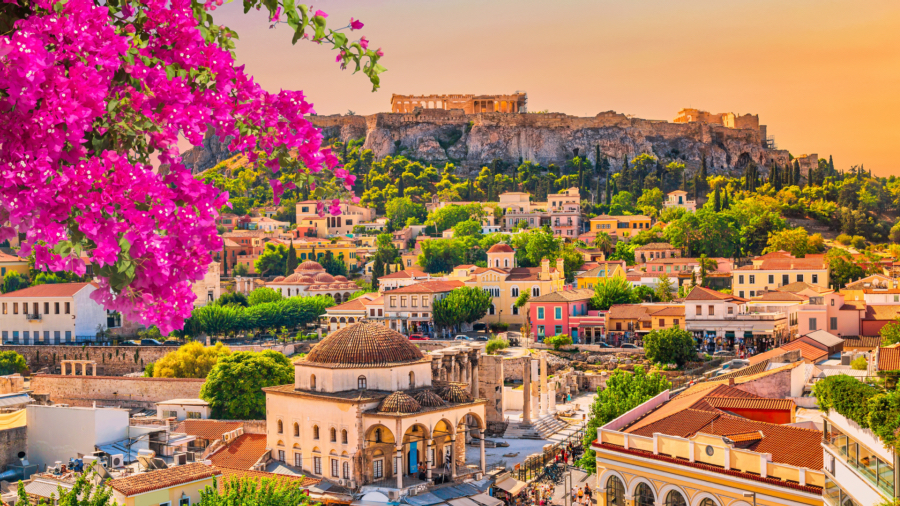
Athens, Greece: Living Layers of History
Athens anchors any understanding of ancient Greece, yet functions perfectly as a modern city break. The Acropolis dominates—the Parthenon and surrounding structures define the classical peak. Downhill, the Ancient Agora lets you reconstruct public life: meeting grounds, market stalls, temples, state offices.
For context, the Acropolis Museum proves essential. It clarifies the sculpture and architectural fragments found on-site. Later phases matter, too. Roman additions like Hadrian’s Library and the Arch of Hadrian trace the city’s continual evolution.
Crowds are guaranteed. The payoff, however, is a full day immersed in layered history, easily followed by a buzzing night out.
Argos, Greece: One of Europe’s Oldest Inhabited Cities
Argos gets less buzz than its neighbors. That’s the point. Choose it for the deep past without the crowds. Archaeology and ancient texts confirm its long history of habitation. Visit the theater—an uncomplicated, impressive stop that fills a half-day. It’s large, quiet, and atmospheric. For wider views, climb Larisa hill. Fortification ruins remain there, overlooking the Argolid plain.
Logistically, Argos is a practical, no-fuss base. Use it when traveling between Nafplio, Mycenae, and Epidaurus. The place lacks overwhelming must-do pressure. Wander. See a few key things. Keep the schedule loose.
Plovdiv, Bulgaria: Thracian Roots and Roman Streets
Plovdiv doesn’t hide its history. You see it straight away. The star is the Roman theater—not just a ruin, but a working venue. Performances still happen there. That gives the place a current, usable energy. Nearby, the Roman stadium is literally wedged into the modern city center. You’ll pass hulking stone columns sandwiched between cafés and retail shops.
The Old Town adds another layer, this time from the National Revival period. Its houses and tight museums map out the city’s shifts through various empires. What makes it all work is the city’s scale. Everything’s walkable. You can see the major landmarks in a morning, then dedicate the afternoon to good food and simply hanging out. Plovdiv feels authentic, not manufactured. It’s a city that has always been lived in.
Oldest Towns Shaped by the Roman World
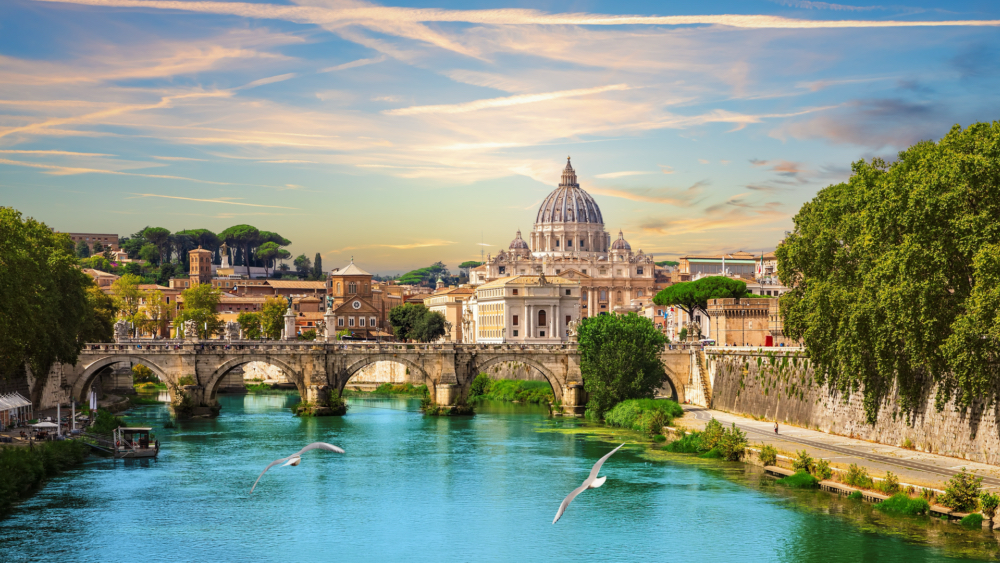
Rome, Italy: The Eternal City for First-Time Visitors
Rome’s scale hits hard. Yet its ancient core clusters tight enough for a single, packed history day. Start at the Roman Forum—the absolute anchor. Centuries pile up here: temples, arches, gutted civic halls. Decent signage stops you from getting lost. Book ahead and the Colosseum plus Palatine Hill slot into a timed ticket block, no hassle.
Want the wider picture? Trek a stretch of the Appian Way. Out here, the city’s edges were forged by engineering: tombs, buried water lines, those relentless roads.
Then shift focus. Smaller churches and zigzagging neighborhood lanes often sit directly atop earlier ruins. That layered coexistence is the entire point of the place. Even an aimless evening walk past those lit-up, silent stones lands right.
Cádiz, Spain: A Phoenician Port with Sea Views
Cádiz perches on a slender peninsula—the sea is never not there. Its origins trace back to Phoenician traders; Rome later left its mark. This isn’t a city preserved under glass. It’s a salt-scrubbed, working port where archaeology surfaces in fragments between plazas and weathered warehouses.
For context, the Cádiz Museum is the best place to start. Then just walk. Lose yourself in the tangle of the old quarter, emerge onto sunbleached squares, follow the waterfront. The view from Torre Tavira is worth the climb. Afterwards, the city beach waits—no trip needed—where you can switch from history to salt air and sunlight in minutes.
Cádiz works for those avoiding monument fatigue. It offers layers, not a guided tour. On an Andalusian road trip, it’s a natural, satisfying stop. History here comes with space to breathe.
Trier, Germany: Roman Gates and Riverside Charm
For a concentrated dose of Roman history north of the Alps, Trier delivers. Pack it into a weekend. Use the hulking Porta Nigra gate as your anchor point—snap the required photo, then get oriented. Beyond it, the imperial baths, amphitheater, and Constantine’s Basilica trace an empire’s footprint. That basilica, in particular, reveals later architectural reuse. Navigation is straightforward: sites cluster within walking distance, supported by clear signs and museums.
Crucially, Trier borders the Moselle Valley. This allows a seamless pivot from ancient stones to vineyard slopes, a two-part itinerary with minimal hassle. It offers the monument density of Rome but bypasses the overwhelming crowds.
Medieval Powerhouses That Still Feel Authentic
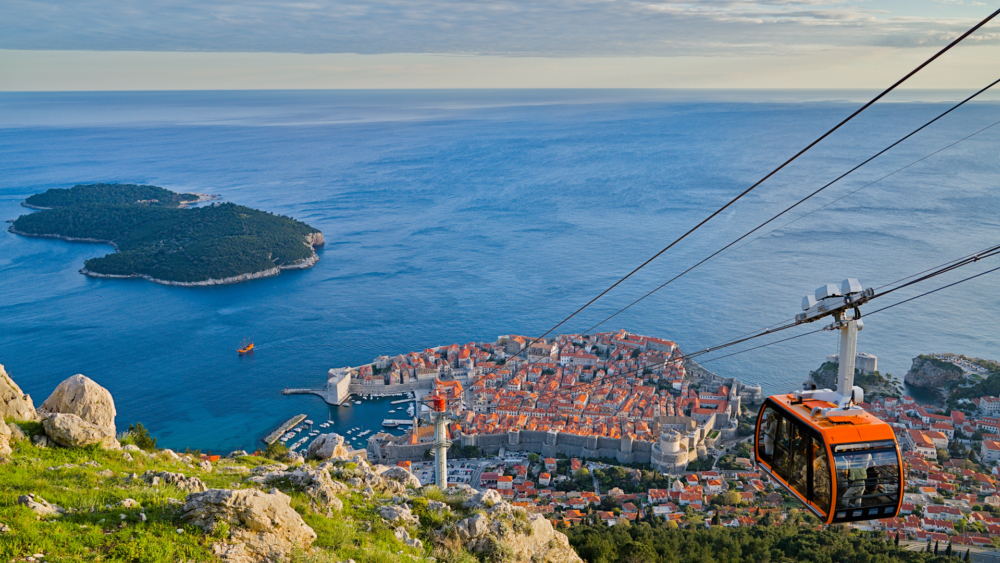
Dubrovnik, Croatia: Walled Beauty on the Adriatic
Dubrovnik’s old town is tightly packed. Visitors come primarily for the walls. Walking the full circuit reveals how defense and commerce shaped everything. Inside, the streets still follow medieval tracks—churches, palaces, and official buildings crammed together. The old harbor hints at its seafaring history, though modern port operations have moved on.
The place gets swamped, summer especially. Timing is critical. Go early. Carry water. Escape the main thoroughfare for breaks. A slower pace alters the experience entirely. Late afternoon light adds another layer.
Tallinn, Estonia: Cobblestones, Towers, and Trade
Tallinn’s Old Town retains a rare, readable medieval blueprint—its original layout and defenses still clearly traced. Begin in the Lower Town at Town Hall Square, the historic merchant heart now lined with cafés and museums. Climb to Toompea for sweeping views and the castle sector, where political power concentrated for centuries. Sections of the city wall and multiple towers remain accessible; walking these passages reveals why a trading city poured resources into fortification.
A modern district sits close by, letting visitors shift between eras within hours. For history that engages without overwhelming, Tallinn delivers. Costs stay reasonable, especially measured against many Western capitals.
York, England: Viking Echoes and Gothic Streets
York is stone, earth, and timber. Roman, Viking, medieval—your legs cross centuries here. The York Minster demands attention, obviously. Visit for the sheer scale, for the silence under the soaring Gothic choir. Viking history? The Jorvik Viking Centre delivers, its recreated peat-preserved streets pulling directly from the mud below.
To grasp the medieval city, walk the walls at Monk Bar. Trace the original footprint, see where the gates choked movement. The Shambles charms, those timber skeletons leaning close. It heaves by noon; dawn is smarter. York fits a weekend. Navigable, dense with detail between the headline stops. Just book key tickets ahead—they pay off when crowds swell.
How to Plan a Trip to Europe’s Oldest Towns
Best Seasons, Weather, and Crowd Strategy
Travel timing reshapes old-city visits. Southern destinations like Athens, Rome, or Dubrovnik turn brutal in peak summer—scorching stone, minimal shade. Late spring or early autumn offers a reprieve: thinner crowds, tolerable heat. Up north, Tallinn or York trade endless summer light for winter’s early dusk and slick cobbles.
For crowds, outsmart them. Begin at dawn. Secure timed entry slots. Let museums provide midday refuge when lanes heave. Cruise ships can suddenly swamp port cities, altering the atmosphere in minutes.
Footwear matters. Cobbles and inclines demand solid shoes. Use evening hours for aimless exploration, after day-trippers vanish.
Budget Tips: Old Cities Without Overpaying
Play the location game smart. Skip staying in the historic center where prices are inflated. Base yourself just outside, then walk or take transit into the old town. Seriously, those few blocks make a huge difference.
Always book tickets at official sites. It’s the simplest way to skip lines and avoid reseller markups.
Eat where the rhythm is local. Lunch specials, bakeries, street markets, and casual spots a few streets back from the main squares avoid the tourist-taxed menus.
Be ruthless with guided tours. One researched, highly-rated tour is worth three mediocre ones. Consider them optional, not obligatory.
Watch the small drains on your budget. That’s ATM fees, buying bottled water constantly, and taking taxis for short hops. It adds up fast.
Always check museum hours for free or discount periods. But never build your entire day around it—policies shift. Just saying.
Smart Itineraries: Combining Towns in One Route
Plan in clusters, not with a frantic, last-minute checklist. Athens pairs naturally with a Peloponnese loop in Greece; Argos fits perfectly between coastal towns and major archaeological sites. For Roman routes, use Rome as a base. Trier, meanwhile, slides into a western Germany itinerary or a quick Luxembourg add-on. Medieval-focused travel? Tallinn links neatly with Helsinki by ferry. York fits right into UK rail plans with London and Edinburgh.
Keep transfers short. Avoid switching hotels nightly—unless you enjoy chaos. Aim for two nights per stop, minimum. That rhythm grants one full day to explore and another flexible day for weather, rest, or a spontaneous side trip. It gives you breathing room.
❓FAQ❓
Do I need a guide to enjoy these towns, or can I do everything self-guided?
Self-guided works for most places thanks to signage and museums, but a short walking tour can help you catch details you’d otherwise walk past.
Are there any dress rules for entering historic churches or religious sites?
Yes—some churches require covered shoulders and knees, and staff may refuse entry if you show up in beachwear.
Can I visit ancient ruins with kids without it turning into a meltdown?
Totally, but keep it short, choose one “big” site per day, and mix in parks, snacks, and something interactive like a hands-on museum.