
🎯Too Long; Didn’t Read
- Cádiz is compact. You can walk it. Key sights cluster in the Old Town and spill out from its edges.
- Places like the cathedral, watchtowers, and coastal forts provide historical context quickly. They don’t demand your whole day.
- Beaches are central here, woven into daily life. There’s the city-bound La Caleta, then the longer stretch of Playa de la Victoria. Walking the seawall is perhaps the easiest way to understand the city’s rhythm – to feel its pace.
- Forget just seeing how the city looks. Head into El Pópulo or similar quarters to see how locals actually live. You’ll dig more from markets and small plazas, those spots that reveal everyday routines, than from most landmarks.
- As for museums and archaeological sites, they add necessary depth. They work well when time slows or rain falls.
- Carnival culture shapes the place year-round. Its influence lingers long after the main festival ends.
- Short trips out of town require little planning. Nearby, you can find wine regions, more beaches, or hilltop villages for a change of scenery.
Iconic sights and viewpoints
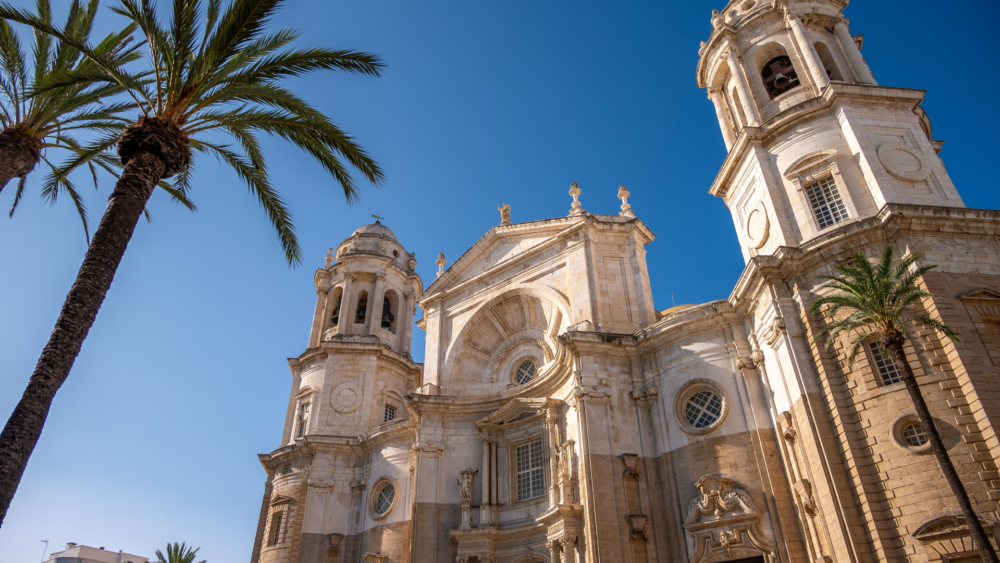
Cádiz Cathedral and Torre Tavira
The cathedral sits near the water, with a layout that’s easy to grasp even on a short visit. Inside, it’s calm, not heavy, and the scale makes sense once you move through it. Climb to the upper levels for views over roofs and the Atlantic edge. Torre Tavira is nearby and works as a counterpoint. It’s smaller, practical, and focused on perspective.
The camera obscura shows the city in motion, live and unfiltered. You’ll see laundry lines, traffic, people cutting through alleys. Together, these two stops give context. One shows intent and structure. The other shows daily rhythm, with no polish added.
Castillo de San Sebastián at sunset
This old fortress sits at the end of a narrow causeway, surrounded by water on both sides. The walk out is part of the visit. Locals pass by, some heading to fish, others just stretching their legs. The site itself is simple. You’re here for timing, not detail.
Sunset brings color without drama, and the city skyline pulls back into view. It’s a good place to slow down, take photos if that’s your thing, or just stand there. The wind can be strong. Bring a layer. Stay until the light drops. Leaving in the half-dark feels right.
Parque Genovés and coastal promenades
Parque Genovés runs along the sea and offers shade, benches, and space to pause. It’s tidy, but not stiff. Locals use it to read, talk, or pass time between errands. The paths connect to long coastal walks that wrap the city’s edge.
No need for a plan here. Just keep moving until you want to stop. You’ll see waves breaking close, dogs being walked, runners keeping pace. It’s not a highlight you rush to photograph. It works better as a reset, especially midday when streets feel tight and loud.
Beaches, water, and laid-back time outside
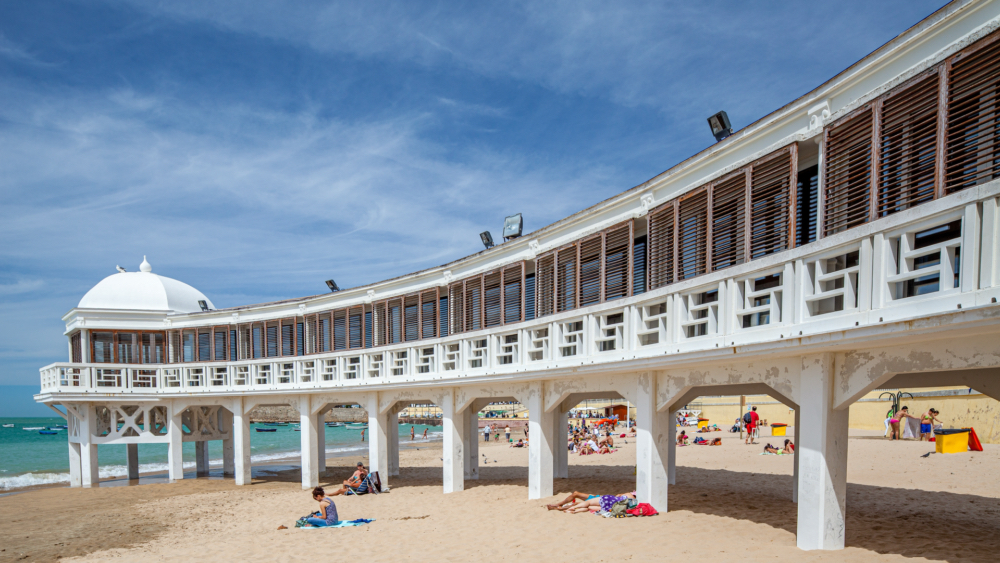
Playa de la Caleta for classic Cádiz vibes
La Caleta stays small, boxed in by weathered buildings and stone. Good weather means it gets claimed early. You’ll see chairs dragged out, coolers, portable radios. The water remains shallow far out, forcing a slow pace. Conversation carries between towels. Kids shriek and splash knee-deep. Vendors trace the perimeter.
This isn’t a beach for swimming lengths or solitude. It’s for sitting. For a quick cool-off. For watching the whole thing unfold. Arrive at dawn or dusk to bypass the crowd. Regardless, the place feels woven into the city’s fabric – an organic pause in the urban grid, not an escape from it. The soundscape alone tells you that: layered talk, market calls, the hiss of a bus braking on a nearby street.
Playa de la Victoria for a long seaside walk
This beach stretches far, with room to breathe. The promenade runs alongside it, lined with cafés and open space. It’s good for walking, jogging, or just drifting with no goal. Waves are stronger here, and the wind shows up more often. That keeps things moving.
You’ll see groups training, couples walking in silence, people watching the water from low walls. It doesn’t feel curated. It’s functional and open. If you want time outdoors without the squeeze of Old Town streets, this is the easy choice.
Boat trips and the Bay of Cádiz
The bay opens Cádiz up to short trips on the water. Ferries and small boats connect nearby towns and give a different angle on the city. From the deck, the skyline flattens out, and the walls and towers make more sense. These rides are practical, not tour-heavy. People commute this way. Others just go for the crossing. It’s calm on most days, though weather can shift plans.
If you’re looking to break up walking and see Cádiz from a distance, the bay does the job without asking for much time.
Old Town neighborhoods and local life

Wander El Pópulo, the city’s oldest quarter
El Pópulo is compact, with narrow streets that fold into each other. You’ll pass arches, small plazas, and residential doors that stay open during the day. It doesn’t try to impress. That’s part of the appeal. Cafés are low-key. Signs are minimal.
People live here, and it shows. Walk without checking your phone. Getting lost only lasts a few minutes. It’s best in the morning or early evening, when light hits the walls at an angle and the pace stays slow. Don’t rush through. Let the area set the tempo.
Markets and tapas: Mercado Central de Abastos
The central market runs on routine. Fish counters dominate, with vendors calling out prices and cleaning as they go. Meat, produce, and small bars fill the rest. It’s loud, busy, and direct. You can eat here without planning much.
Order a plate, stand at the counter, move on. Quality depends on timing, so mornings work best. Locals shop fast and leave. Visitors linger more. That’s fine. Just don’t block space. This is a working market first. If you want to see what Cádiz eats and how it moves, start here.
Plazas and people-watching: Plaza de las Flores
This square stays active most of the day. Flower stalls add color, but the draw is movement. People cross through on errands, meet briefly, or stop for coffee nearby. It’s a good place to sit and watch without feeling obvious. No one pays attention. Cafés turn tables quickly. That keeps the flow going.
It’s not a quiet spot, but it’s not chaotic either. Spend twenty minutes here and you’ll get a sense of local rhythm. Longer if you like the noise and short conversations drifting past.
Culture, history, and rainy-day ideas

Museo de Cádiz and Phoenician roots
The museum covers long stretches of history without being overwhelming. Exhibits move from ancient finds to later periods in a clear order. The Phoenician sarcophagi stand out, not because of display tricks, but because of presence. You can take your time or skim. Both work. It’s a solid option when the weather turns or you need a break from walking.
Labels are straightforward. Rooms are quiet. You leave with context, not trivia overload. It’s close to the park, so pairing the two makes sense if you want balance in your day.
Roman Theatre of Cádiz and layered history
This theatre sits partly hidden among later buildings. You enter through modern streets, then step down into older ground. The layout is clear even in fragments. Panels explain what’s missing without guessing. It’s a short visit, but a useful one.
You see how Cádiz stacked eras instead of replacing them. There’s no long walk, no ticket maze. Just access, space, and time to look. It fits easily into a day, especially if you’re already nearby. Don’t expect a full reconstruction. Expect evidence and restraint.
Carnival spirit: theaters, songs, and costumes
Carnival shapes Cádiz beyond its official dates. Songs, humor, and costumes spill into daily talk and local theaters year-round. You don’t need to catch the main event to feel it. Small performances and rehearsals happen often, though schedules change.
If you find a show, go. If not, listen for lyrics and references in bars and plazas. It’s political, sharp, and grounded in local life. Understanding every word isn’t required. Tone carries meaning. This part of the city works best when you stay curious and don’t push for explanation.
Day trips and easy add-ons from Cádiz
Jerez de la Frontera: sherry and horses
Jerez sits inland and moves at a different pace. Sherry bodegas anchor visits, but you don’t need deep knowledge to enjoy them. Tours vary, so pick one that keeps things simple. The city also links closely to horse culture, with events and training centers visible if you look around. Streets feel wider. Crowds thin out.
It’s an easy train ride and works well as a half-day plan. Eat locally before heading back. Jerez rewards a slow walk more than a packed schedule.
El Puerto de Santa María: beaches + bodegas
El Puerto mixes seaside space with food and wine stops. Beaches stretch out, less crowded than Cádiz’s central ones. In town, bodegas sit close together, and seafood places keep menus tight. It’s casual. You can split time between sand and a late lunch without stress.
Transport back and forth is simple by ferry or train. That makes it flexible if the weather changes. El Puerto doesn’t demand a full day. It fits neatly into a relaxed plan, especially if you want variety without distance.
Vejer de la Frontera: a white hilltop escape
Vejer rises above the landscape and feels removed from the coast. Streets climb, turn, and open into views over fields. It’s quieter than beach towns, with fewer distractions. Walking here takes effort, so wear decent shoes. The reward is space and calm. Cafés stay small. Shops close early. Don’t rush meals.
Vejer works best when you let hours stretch a bit. It’s a good contrast to Cádiz’s density and noise, and worth the trip if you want a change of setting without going far.
❓FAQ❓
Is Cádiz suitable for families?
Yes. Shallow beaches, open plazas, and pedestrian areas simplify navigation with children.
Any notable local goods?
Seek out regional ceramics, products made from local sea salt, and small-batch food items. Examples include canned seafood and traditional sweets.
How long should a visit last?
Two to three days covers the city’s core comfortably. Additional time allows for beaches or short trips elsewhere.
Is English common?
Not widely spoken. However, basic transactions are manageable, and locals typically show patience with limited Spanish.
When is the ideal time to go?
Spring and early autumn offer moderate weather and manageable visitor numbers. These seasons avoid the intensity of mid-summer heat or winter conditions.